Why We Lose Interest in Our Partner When There’s Too Much “We” in a Relationship
In the previous article, we talked about Anna and Ivan, who have been together for many years, love each other, function well as a couple, and one evening suddenly notice that desire no longer feels the way it did at the beginning of their relationship. We looked at how this does not necessarily mean that love is over or that something is wrong with the relationship. Over years of living together, the context itself changes: there is less uncertainty and fantasy, but much more safety, reality, and predictability.
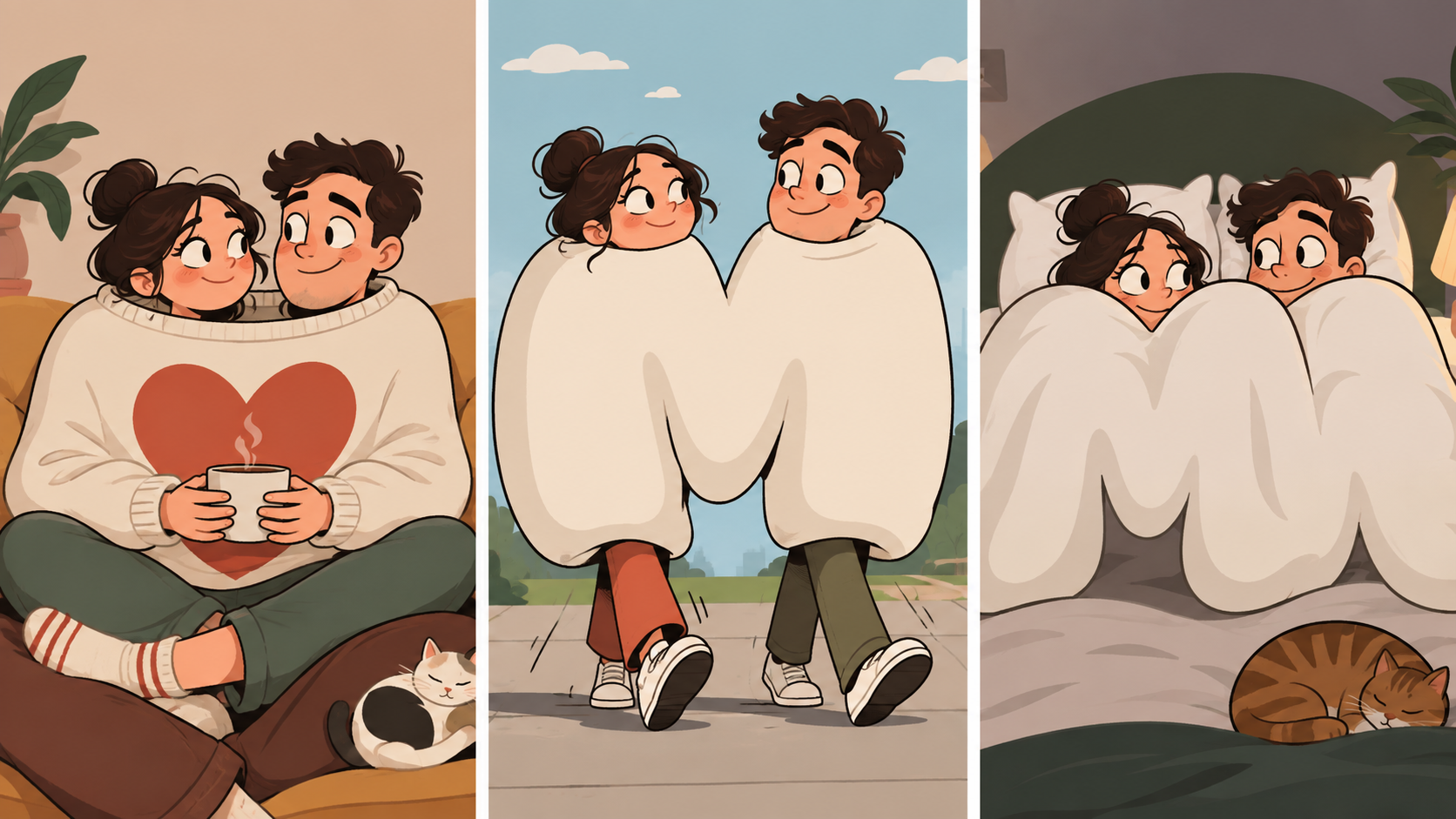
Now I want to take that idea a little further, because sometimes the issue is not simply that we know each other very well. Sometimes the beautiful shared “we” that we have spent years building simply becomes too big.
We have all seen those couples who share one Facebook account. Everything is “we”: we like this, we don’t eat that, we don’t watch those kinds of films, we love sports, we don’t talk to that person anymore, we adore this café. We, we, we. Hopefully it does not eventually reach the point of “we pooped,” although apparently none of us can be completely sure.
On the one hand, there is nothing particularly strange about this, because developing a shared “we” is a completely natural part of becoming a couple. There used to be two separate people, each with a life of their own, and then they met, started building a relationship, created a shared home and shared habits, developed little rituals and jokes that only the two of them understand, perhaps moved somewhere together, lost things, gained things, and gradually became not only two individuals but also a separate system we call a couple.
And that is normal. The problem is not that a “we” appears. The problem is that sometimes this “we” becomes so large that it starts getting difficult to find the “I” and the “you” inside it.
When safety turns into fusion
In the previous article, I wrote about how people who choose each other usually want safety, which is entirely understandable. We want to know that this person is here, that they are not suddenly going to disappear, that they love us, choose us, accept us, and that we can finally relax.
But sometimes underneath this desire for safety there is also anxiety, and we try to quiet that anxiety by collecting as many guarantees as possible.
If we do everything together, have all the same friends, all the same plans, spend every weekend together, share every interest, and ideally even have roughly the same opinions, it can feel safer. This person is definitely mine. They are definitely not going anywhere, because at this point they barely have a separate life left to go anywhere with.
That sounds exaggerated, but in real life this dynamic is usually much softer, which is exactly why it can be difficult to notice. One partner does not have to forbid the other from seeing friends or demand a detailed account of every minute. You can simply get used to doing absolutely everything together, consulting each other about every decision, sharing the same social circle, and one day genuinely wonder why your husband would want to go somewhere without you when you could go together, or why your wife needs an activity that you are not involved in when everything between you is already fine.
And this brings us to a fairly simple but important point: desire still happens between two people. When we merge into one large shared organism, it becomes quite difficult to feel wild passion for what psychologically feels like your own arm. You are very glad the arm is there, life would certainly be worse without it, but you do not normally stare at it thinking, “My God, what a masterpiece. I want to kiss every single one of your fingers.”
Who is this stranger?
You may have had moments like this even if you are not particularly prone to losing yourselves in relationships.
Imagine that you have lived with your husband for years. You know exactly what he is like at home, how he drinks his coffee, how he behaves with the children, how he argues with the satnav, how he lies on the sofa, and what he looks like in the morning when he has not yet fully worked out who he is or why he has woken up.
And then one day you see him at a conference, speaking in front of a room full of people, answering questions, making jokes, completely confident in what he is talking about, and suddenly you think: wow, I had forgotten he was like this.
Or a man sees his wife among her students, clients, or colleagues, in a professional setting where she is no longer the person who asked him ten minutes ago whether he remembered to buy toilet paper. Here she is someone people listen to, turn to, and respect, someone who knows things and does things, and suddenly he looks at her a little differently.
For a moment, the person stops being just a part of your everyday life and becomes separate again, and this is often exactly where curiosity begins to appear.
It does not necessarily become sexual curiosity in the first second. You do not see your husband standing next to a projector and immediately lose your mind. But you notice him. You are no longer merely aware that he exists and that today it is his turn to pick the child up from school; you are actually looking at him as another person.
Desire usually begins with interest
From a Gestalt perspective, I really like the logic of contact here, because before we move towards anything, something first has to enter the foreground of our awareness. I notice something, then it begins to interest me, a need takes shape, and only then do I move towards contact.
Sexuality, if we simplify it greatly, works in a similar way. Before desire can appear, interest has to appear first, and primarily interest in the person, not in their genitals.
I think this matters because when couples notice that sex somehow does not feel the way it used to, anxiety appears very quickly and people immediately start trying to “save” the relationship. We need to have sex more often, try something new in bed, organise a candlelit dinner, urgently buy some new underwear.
But before any of that, I actually need to see a person beside me who is interesting to me.
If I look at my partner and see only part of our shared system, the person who will pick up the child, pay the bill, make dinner, find the tickets, buy dog food and eventually lie down next to me in bed, there may not be much room left for curiosity.
That is why the question of how to stay interested in your partner does not necessarily begin with inventing new ways to entertain each other. Sometimes it begins with a much simpler question: do I still see a separate person in front of me?
“But we do everything together because we like being together”
That makes perfect sense. If I enjoy being with you, why would I deliberately go somewhere without you, develop separate hobbies, or do things on my own?
Some people may have come across dating or pickup courses that teach men and women various kinds of manipulation: suddenly disappear, play the mysterious character, leave sentences unfinished, or try things like, “Text him: ‘You won’t believe what I found out about you!!!’ and then switch off your phone for two days so he can drive himself mad wondering.”
These are, incidentally, extremely effective ways of forcing somebody’s attention onto you. They are also very far removed from healthy relationships and genuine intimacy.
I am definitely not suggesting that you artificially create distance or urgently sign up for yoga, dancing, and cross-stitching simply so that your partner has enough time to miss you. The point is not distance for the sake of distance. The point is that two people still need lives of their own.
And this is where the question how not to lose yourself in a relationship turns out to be connected not only with personal boundaries and freedom, but also with whether there is still any room for curiosity between you.
When was the last time you asked yourself: what do I actually want? What genuinely interests me? What am I tired of, and what am I missing? When was the last time your own attention was focused on you?
Is there something in your life where you are not simply “Maria from the Smiths,” but Maria as a separate person who does things, is interested in things, discovers things about herself, and continues to change?
Then there is always something in the relationship that I still do not know about you. Not because you are hiding something from me, but because you are continuing to live your own life.
Novelty does not have to come from very far away
Now for a little bit of practical advice. When people talk about how to keep a relationship interesting, they often recommend creating new experiences together, and there is actually something useful in that advice as long as you do not treat it as a magical instruction.
You do not need to fly to the Maldives or jump out of a plane, although if you want to, why not. It might be a trip somewhere new, camping, skiing, roller skating, horse riding, dancing, visiting another country, taking a course together, or simply being in a situation where neither of you is following your usual domestic script.
Why can this work? Because I get another chance to see you slightly differently.
I didn’t know you laughed like that when you fell over on roller skates. I didn’t know you were this calm in a crisis. I didn’t know you could talk about this subject for two hours with your eyes absolutely lighting up. I didn’t know you were terrified of horses after spending the entire evening telling me how brave you were.
Suddenly I discover something about you again.
And sometimes you do not even need to do these things together. You can, on the contrary, allow each other to have separate experiences and then come back to one another as slightly different people.
Over ten or twenty years, a person does not remain exactly who they were on the first date. They change, gain new experiences, lose things, find things, and their views, desires, body, interests, fears, and ways of relating to other people change as well.
So if it feels as though we already know absolutely everything about our partner, perhaps the problem is not that there is nothing left to discover. Perhaps we simply stopped being curious.
That is why how to keep passion alive in a long-term relationship is not always a question that begins with sex. Sometimes it begins with being able to see in front of you a person you still do not completely know.
Personal space does not mean emotional distance
When we talk about personal space in a relationship, it can sometimes sound as though a healthy relationship should involve distance, with everyone doing their own thing and not being particularly interested in the other person.
That is simply the opposite extreme.
Closeness does not contradict separateness. In fact, genuine intimacy is only possible when there are two separate people, because otherwise it becomes difficult to understand who exactly is getting close to whom.
You can have a great deal in common, love spending time together, have children, friends, rituals, favourite places and a shared life, while still remaining two people with two inner worlds.
I can know you very well and still not know you completely. I can love you, trust you, feel secure that you are here, and at the same time remember that you are not my property and not an extension of me.
You are a separate person with your own thoughts, fantasies, desires, fears, interests, and experiences, some of which happen entirely without me, and that separateness can leave room for interest.
Maybe the question is not how to “bring the passion back”
If a couple has become overwhelmingly “we,” I would not begin by asking how many times a month they have sex. I would be more interested in whether there are still two people there.
Who am I outside this relationship? What interests me? What do I want? What do I live for when I am not being a partner, a mother, a father, the person who organises the household, or the person who earns the money?
And who are you?
Am I still curious about you, or do I think I already know everything there is to know? Can you still surprise me, and do I actually leave you enough space to do that? Do we have things we can bring back to each other from our separate lives, or has absolutely everything in our lives become shared?
Because desire does not necessarily have to be “brought back” through some specifically sexual technique. Sometimes the first useful step is simply to see another person beside you again, not a function, not part of the household machinery, but someone separate, alive, and not completely known.
And when that happens, interest can sometimes begin to return long before we even get to the conversation about sex.
I’ll continue this topic in the next part.
Ready to find your therapist?
Understanding therapy is one step. The next is finding someone you feel comfortable talking with about what matters to you. Start with a free 15-minute online introductory call.
15 minutes · online · free