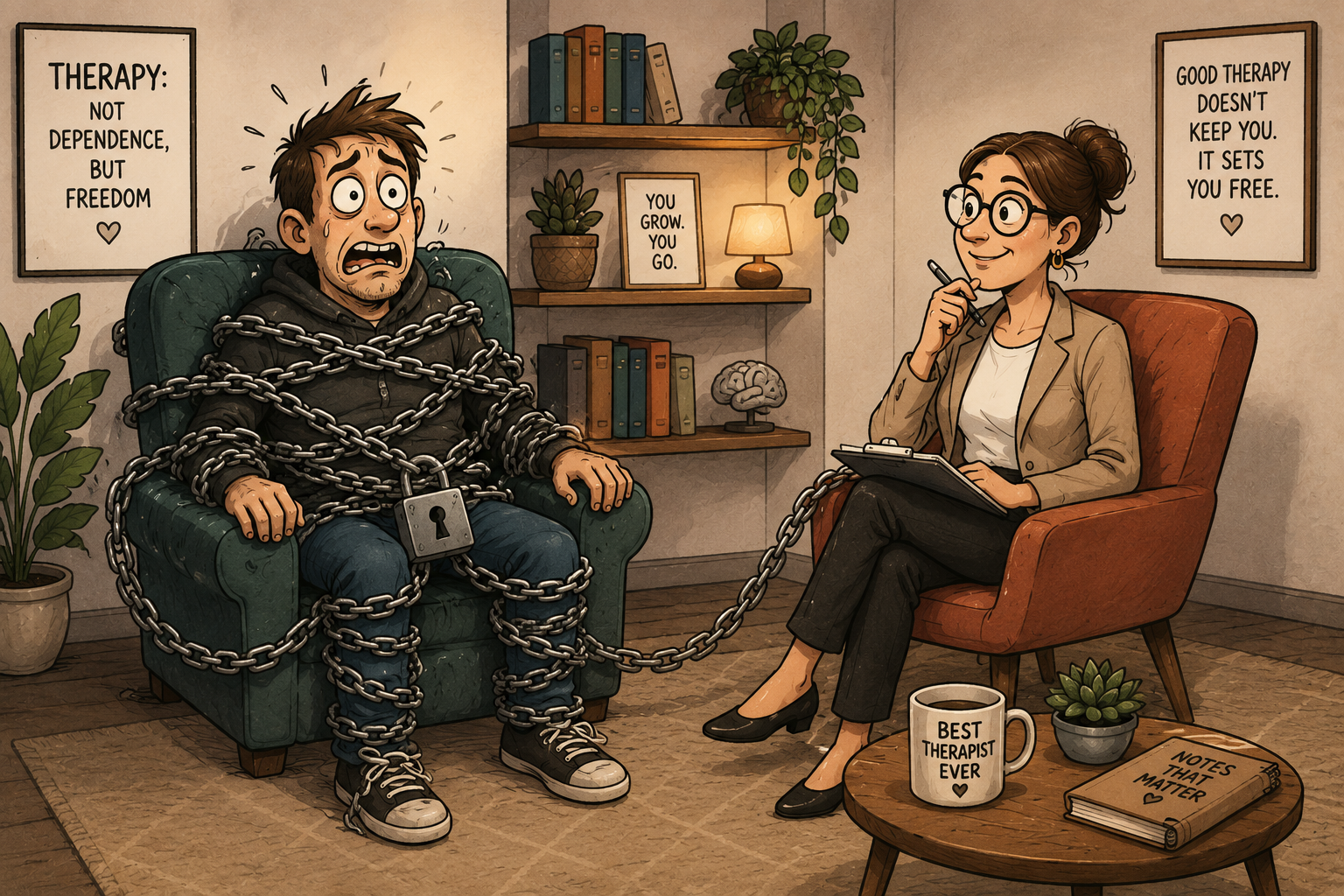
Can You Become Dependent on Therapy?
"Come on. If I start seeing a therapist, it'll go on for years. They'll keep finding new issues just to make me come back. I'll become dependent on therapy. And honestly... how can just talking possibly help?"
If you've ever had this thought, you're not alone.
Many people delay reaching out for months or even years, because of exactly this fear.
So let's look at how much truth there really is behind it.
You Want to Go. But You're Hesitant.
Let's imagine Anna.
She's smart, curious, and interested in personal growth. She follows therapists on social media and occasionally comes across posts about healthy relationships, emotional boundaries, or learning to say "no" without guilt.
Some of it resonates.
She feels drawn to the idea of therapy.
But she's also afraid.
Nothing terrible has happened.
There hasn't been a major crisis.
Life is... okay.
Except that it doesn't feel particularly joyful either.
And then another thought appears:
"Maybe I'm exaggerating. Maybe therapy isn't even necessary. And what if I start... and can't stop?"
Does Therapy Make People Dependent?
No.
At least not ethical psychotherapy.
Ideally, your therapist is properly trained, licensed or certified according to local professional standards, regularly receives supervision, and continues their own personal therapeutic work.
The goal of therapy is not to make clients dependent.
It's the opposite.
A good therapist works from the very beginning toward the day when you no longer need them as your primary source of support.
At first, a therapist may provide something you're currently missing.
Someone who can stay present with difficult emotions.
Someone who helps you notice patterns you couldn't see on your own.
Someone who supports you while you're taking difficult new steps.
That support is important.
But it's temporary.
Therapy Teaches You to Rely on Yourself
Gradually, people begin developing skills they may never have fully learned before:
- recognizing their emotions;
- understanding their needs;
- setting healthy boundaries;
- tolerating conflict;
- building close relationships;
- making difficult decisions;
- coping with life's challenges.
Over time, these stop being things your therapist helps you do.
They become your own abilities.
Why Doesn't Therapy End After Three Sessions?
Because psychological change doesn't happen overnight.
Insight can happen quickly.
Real change usually doesn't.
Understanding something is one thing.
Living differently is another.
New ways of relating to yourself and others need to be practiced.
Repeated.
Tested.
Sometimes failed.
Then tried again.
That's why therapy may last months or sometimes longer.
Not because therapists want to keep clients forever.
But because lasting psychological change takes time.
One of the Most Important Stages of Therapy Is Separation
People rarely talk about this.
Yet one of the goals of therapy is reaching a point where you no longer need your therapist as your emotional crutch.
Therapy ends naturally.
Not because someone gets offended.
Not because you've "graduated."
But because you've developed enough inner resources to navigate life on your own.
Life won't suddenly become easy.
But you won't feel helpless anymore.
That's what healthy therapeutic separation looks like.
Does That Mean You'll Never Return?
Of course not.
Life changes.
New losses, crises, transitions, or major decisions can arise.
Coming back to therapy later doesn't mean you became dependent.
It simply means you're choosing to seek support when it's genuinely helpful—just as you might see a doctor when a new health issue appears.
In Closing
The goal of psychotherapy is not to make you need your therapist forever.
Its purpose is to help you become someone who can eventually support yourself.