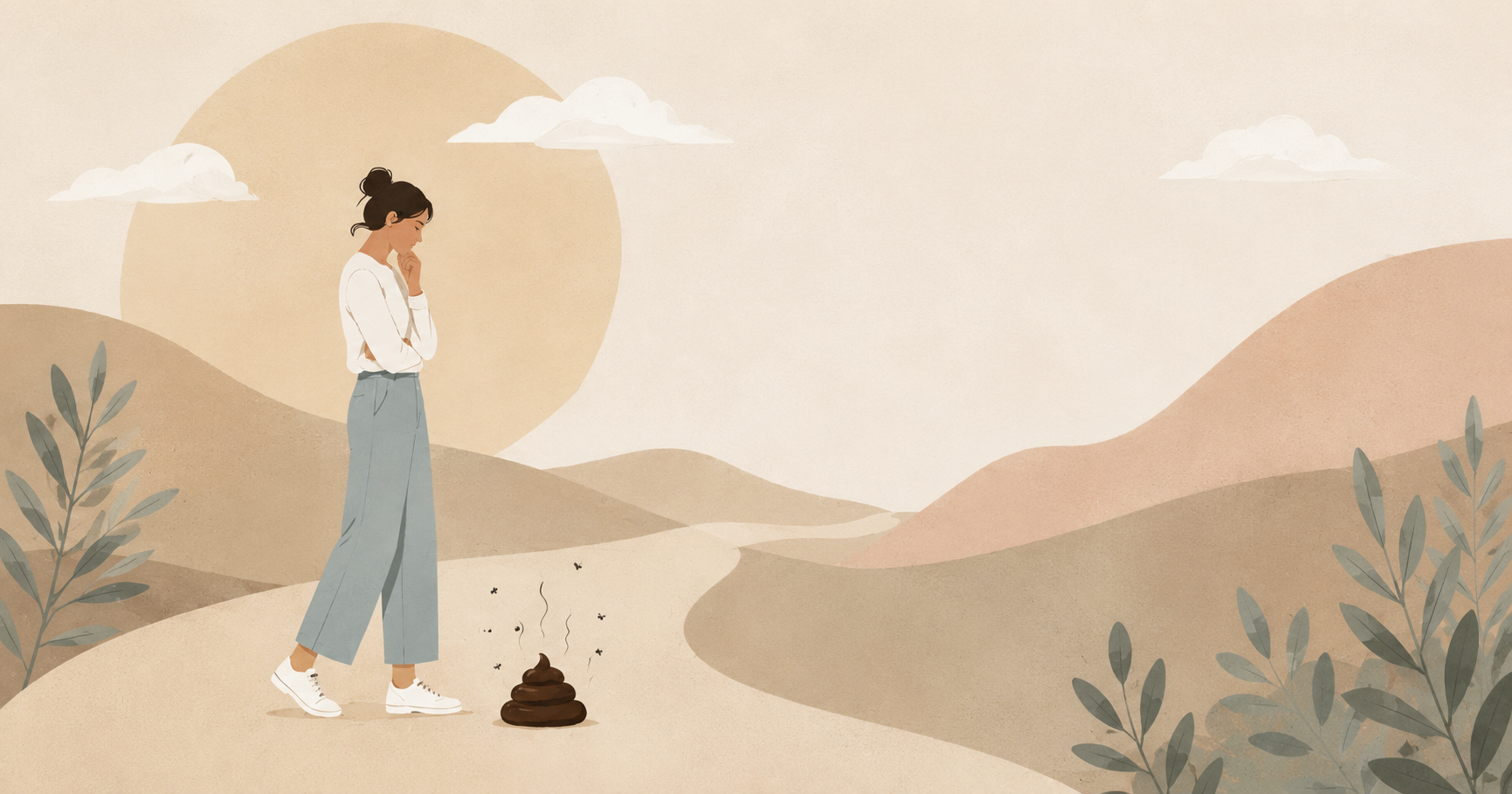
About shit and acceptance
You often hear the advice: “Just accept it.” Yeah, sure.
But what does acceptance actually mean in psychology? Does it mean resigning yourself to something? Giving up? Learning to love what happened? Or convincing yourself that everything happens for the best?
No.
I’ll try to explain the difference between acceptance and non-acceptance through a simple, slightly crude, but very clear metaphor.
What acceptance is NOT
💩 Trying to convince a pile of shit to become a violet
I’m walking down the road and see a pile of shit.
I ask it not to be the way it is. I try to persuade it and even promise to help it change. After all, being something else—say, a violet—would be so much more beautiful.
💩 Fighting something that already exists
I see a pile of shit.
I don’t like it. I start poking it with a stick. I try to make it disappear or change. I even argue with it. I might get into a fight with it. Look how strong I am!
💩 Getting stuck in your own emotions
I see a pile of shit.
I stop and start worrying. I might even cry. After all, it’s terrible that shit exists in this world. And it’s deeply unfair.
I stand there staring at it, unable to move on. Because there shouldn’t be any shit in the world. And yet, there it is.
💩 Analysing it endlessly
I see a pile of shit.
I step in it. I keep trampling around, trying to understand what it was before it became shit and what brought it to this state.
It smells awful, and I’m disgusted. But I keep stomping around in it. Because it is so important to understand why it is here and what it is made of.
Pseudo-acceptance
💩 “Oh, shit! You’re so beautiful! I love you! What a blessing!”
This is not acceptance either.
It is self-deception or an attempt to force yourself to love something you do not actually like.
What does genuine acceptance look like?
💩 Ugh, shit.
I keep walking. Whenever possible, I try not to step in it or inhale those wonderful aromas.
That is acceptance.
Yes, it exists. Yes, I don’t like it. But I am not going to spend my entire life fighting the simple fact that it exists.
P.S. This story is not really about shit, of course.
It is about how often we fight reality instead of first allowing ourselves to see it as it is.
Which form of non-acceptance do you tend to choose most often? 😊
Why acceptance matters
In Gestalt therapy, acceptance does not mean passivity or giving up on change.
Acceptance is the moment when we stop arguing with reality.
Only then do we have the opportunity to decide:
- what I can change;
- what I cannot change;
- how I want to move forward.
While a person spends all their energy fighting something that has already happened, there is often little energy left for their own life.
That is why acceptance is an important part of psychological work with anxiety, loss, divorce, difficult life changes, resentment and many other painful experiences.